
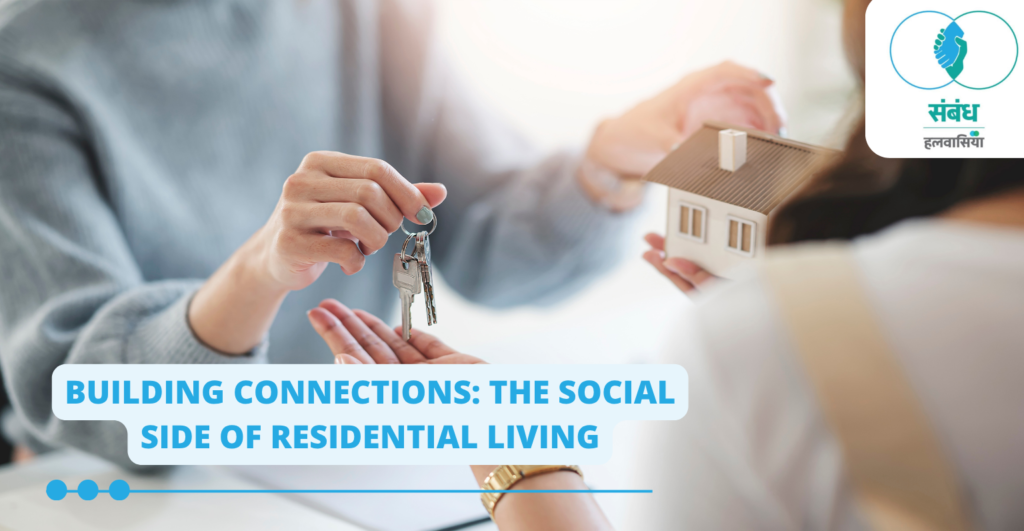
When we think about buying a home, we often focus on the obvious—location, layout, price, and amenities. But there’s one factor that quietly shapes our everyday happiness, often without us even realizing it: the people around us.
A home is not just defined by its walls, but by the relationships, interactions, and sense of belonging it creates. This is where the idea of social living in modern residential communities comes into play.
Because at the end of the day, a good home gives you comfort—but a great community gives you connection.
More Than Just Neighbors
Remember a time when neighbors knew each other by name? When festivals were celebrated together, and doors were always open for a quick chat or a cup of tea?
In many ways, modern life has taken us away from that simplicity. Busy schedules, digital distractions, and urban isolation have made meaningful interactions rare.
But well-designed residential communities are bringing that feeling back.
Here, neighbors are not just people living next door—they become:
- Morning walking partners
- Evening conversation companions
- Emergency support systems
- Lifelong friends
These connections may start small—a smile in the elevator or a quick hello—but over time, they grow into something much deeper.
Shared Spaces, Shared Moments
One of the key reasons social connections thrive in residential communities is the presence of shared spaces.
Think about it:
- A clubhouse where people unwind after work
- A park where children play together
- A jogging track where residents cross paths daily
- A community hall where festivals come alive
These spaces are not just physical amenities—they are social catalysts.
They create opportunities for natural interactions without forcing them. You don’t have to “make plans” to meet people. Connections happen organically, simply because you share the same environment.
And sometimes, the most meaningful relationships begin in the most casual settings.
Celebrations That Bring People Together
Festivals and events hold a special place in Indian culture—and residential communities amplify that joy.
From Diwali decorations to Holi celebrations, from New Year gatherings to weekend activities, these moments:
- Break the ice between residents
- Strengthen bonds
- Create shared memories
Living in a community means you’re never celebrating alone.
There’s something incredibly comforting about hearing laughter in the corridors, seeing lights across balconies, and feeling the collective energy of people coming together.
It transforms routine living into a vibrant experience.
A Better Environment for Families
For families, especially those with children, the social aspect of residential living is invaluable.
Children growing up in a community benefit from:
- Ready-made friend circles
- Safe outdoor play areas
- Exposure to diverse people and cultures
Instead of being confined indoors with screens, they experience real-world interactions—learning teamwork, communication, and empathy.
For parents, it creates a support network. Whether it’s sharing responsibilities, exchanging advice, or simply having someone to rely on, the sense of community makes life easier and more fulfilling.
Even for elderly residents, social living reduces loneliness and brings a renewed sense of purpose through regular interactions.
Everyday Interactions That Matter
Not every connection needs to be grand or life-changing. Sometimes, it’s the smallest interactions that make the biggest difference.
A quick conversation in the lift.
A wave from the balcony.
A casual chat during an evening walk.
These moments may seem insignificant, but they add warmth to daily life.
They remind you that you’re not alone—that there are people around you who recognize you, acknowledge you, and share the same space.
In a world that often feels disconnected, these everyday interactions bring a sense of grounding.
A Sense of Security Through Community
There’s also a deeper layer to social living—the feeling of safety that comes from being part of a community.
When people know each other, they naturally look out for one another.
- Suspicious activity is noticed quickly
- Help is available in emergencies
- There’s a collective sense of responsibility
This kind of informal support system adds a layer of comfort that no security system alone can provide.
It’s the difference between living in a space and truly belonging to it.
Designing for Connection
Modern residential developments are increasingly being designed with social interaction in mind.
Instead of just focusing on individual homes, developers are creating environments that encourage togetherness:
- Open courtyards
- Community seating areas
- Interactive zones
- Multi-purpose spaces
Projects like Halwasiya Shivlar Sambandh reflect this shift—where the goal is not just to build homes, but to build communities where people can connect, grow, and thrive together.
Because true luxury today is not just about space—it’s about the quality of life and relationships that come with it.
The Emotional Value of Belonging
At its core, social living is about something deeply human—the need to belong.
We all want to feel:
- Seen
- Heard
- Connected
A well-knit residential community fulfills this need in a way that no standalone home can.
It turns a physical space into an emotional one.
It transforms strangers into familiar faces.
It creates a support system that enriches everyday life.
Final Thoughts
As homebuyers, it’s easy to focus on tangible factors—square footage, interiors, and amenities. But the social side of residential living is just as important, if not more.
Because years down the line, what you’ll remember isn’t just the layout of your home—but the people, the moments, and the connections that made it special.
Choosing a home in a well-planned community means choosing:
- A richer lifestyle
- A stronger support system
- A more connected way of living
And in a world that’s constantly moving faster, that sense of connection is not just valuable—it’s essential.